MIKOby MILO

Nobody got good at calls by reading about them.

MIKO rings you. You talk. It tells you what to change.

From link to interview in four moves.From the first go to the one that sounds right.From the job advert to the answer you are proud of.

  1. 1
    Send the link.Pick the calls.Paste the job.

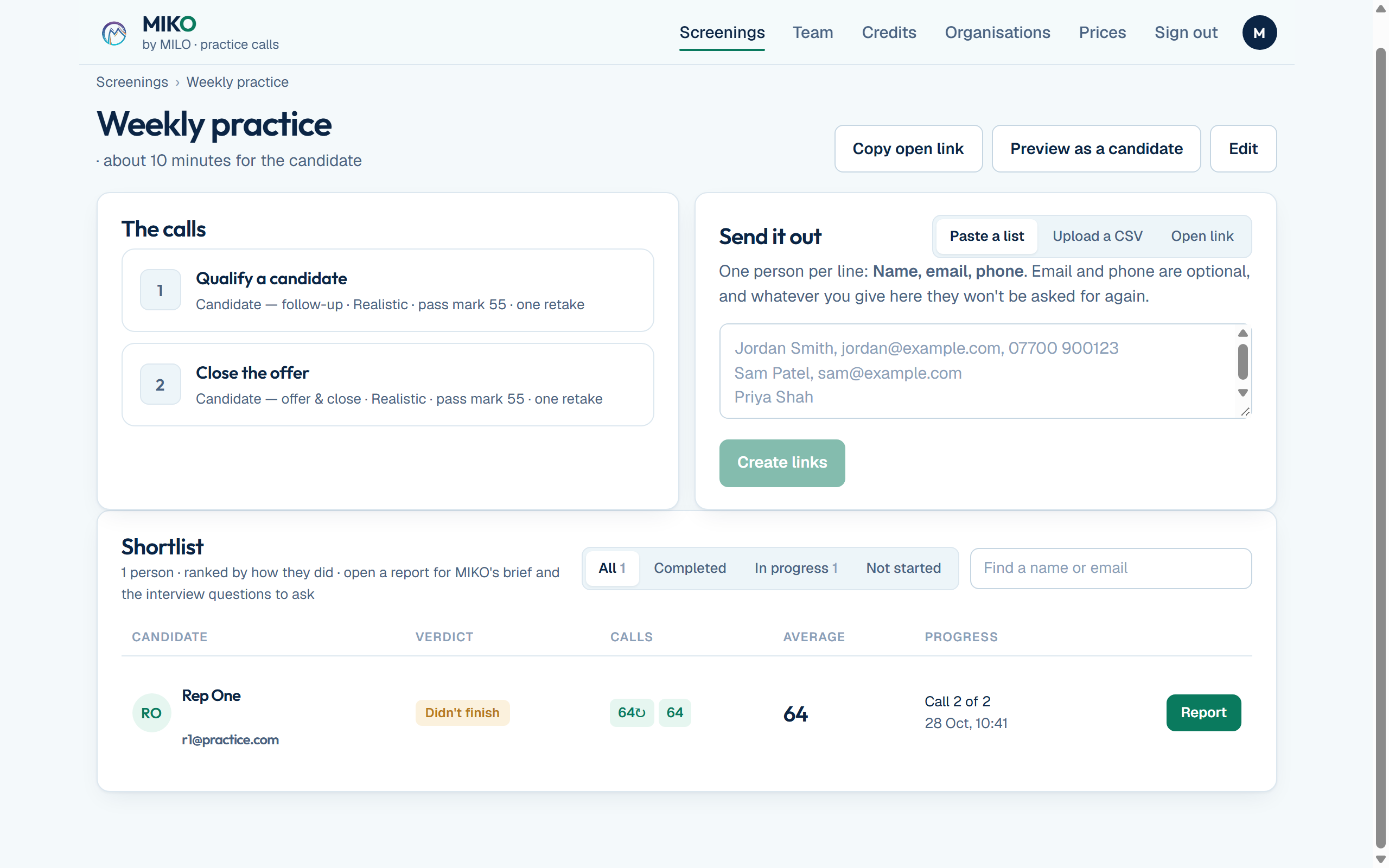
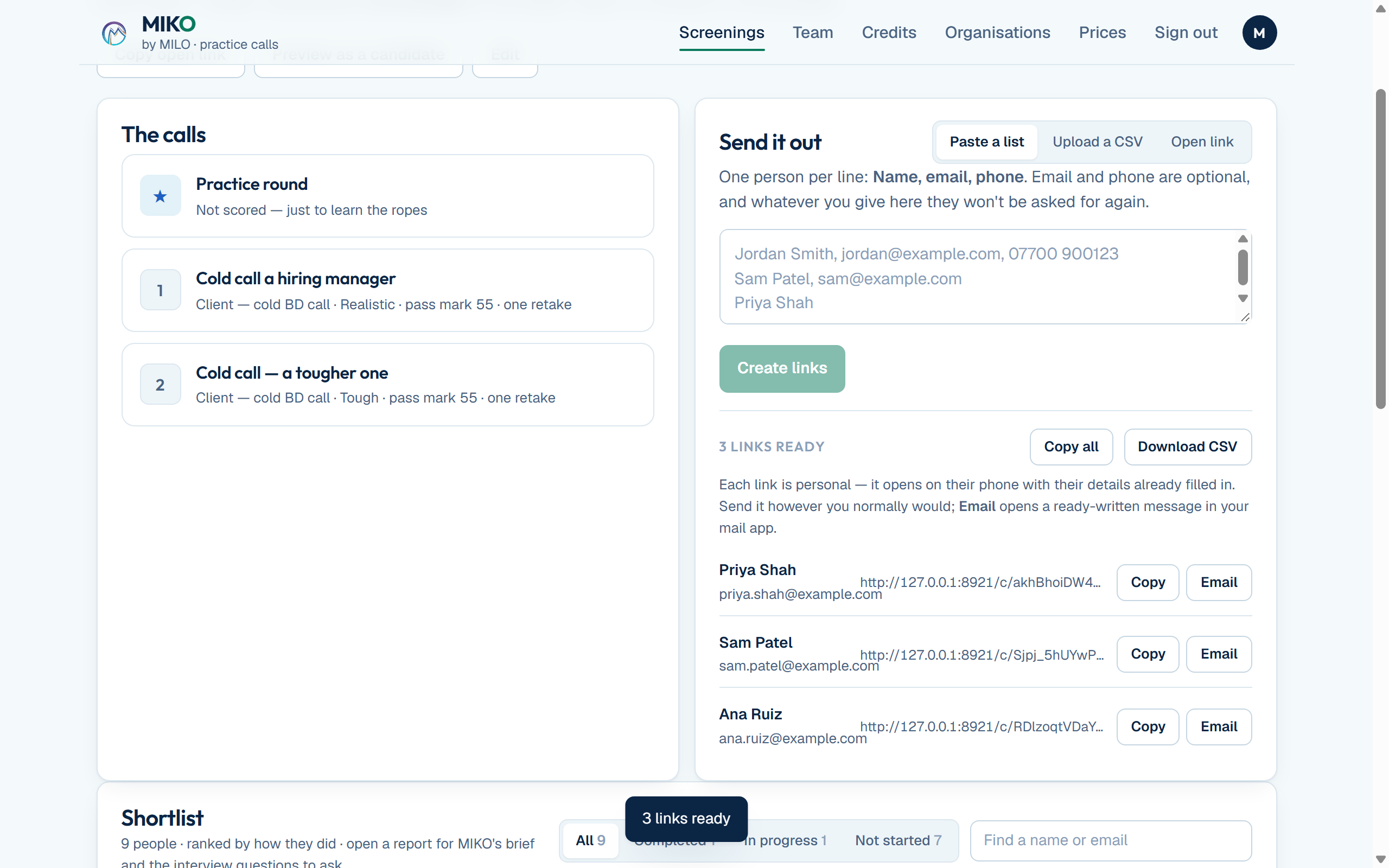
    Paste a list or a spreadsheet. Everyone gets a personal link and a brief that says exactly what to expect.

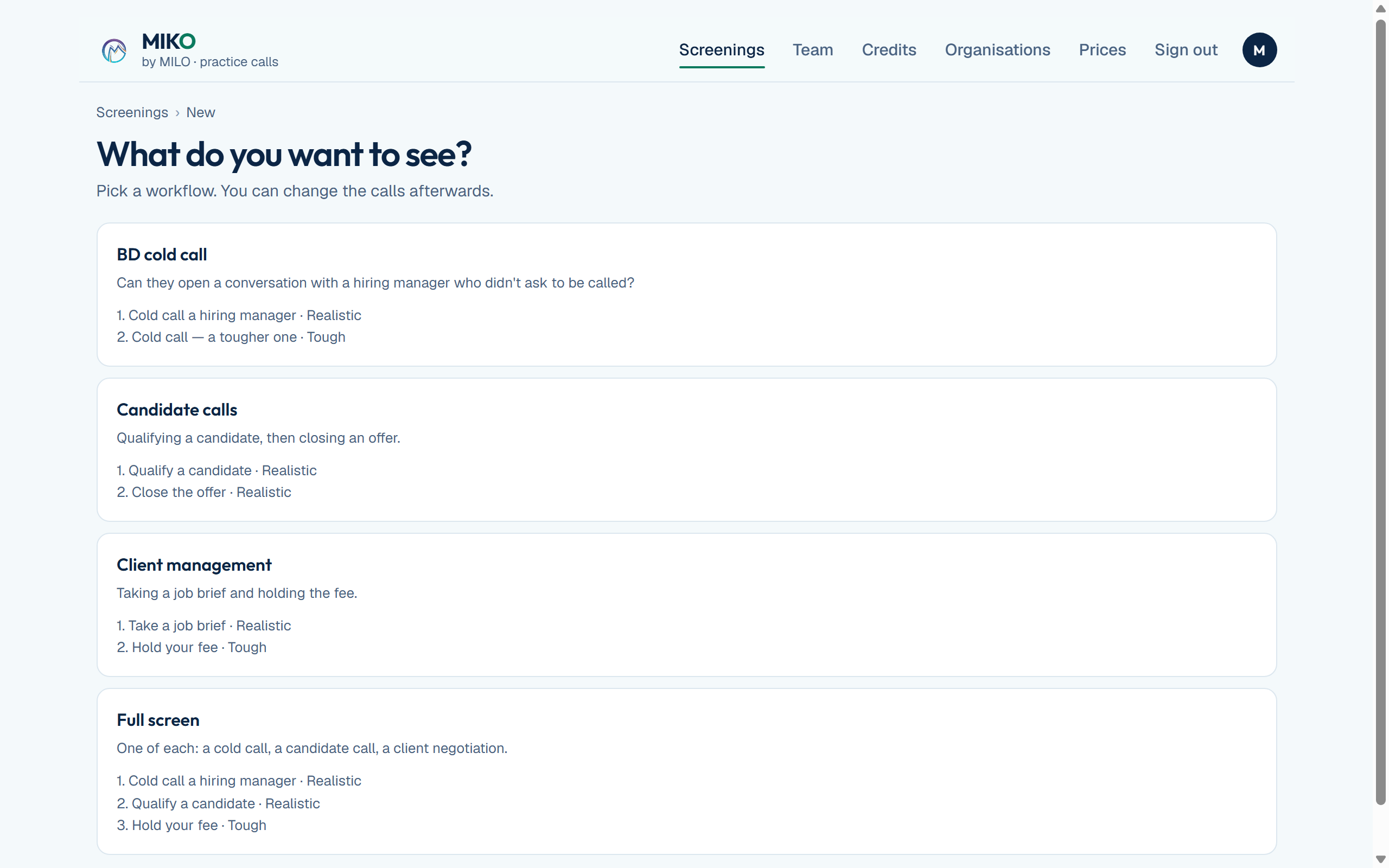
    The cold call, the fee conversation, the close. The whole team gets the same set.

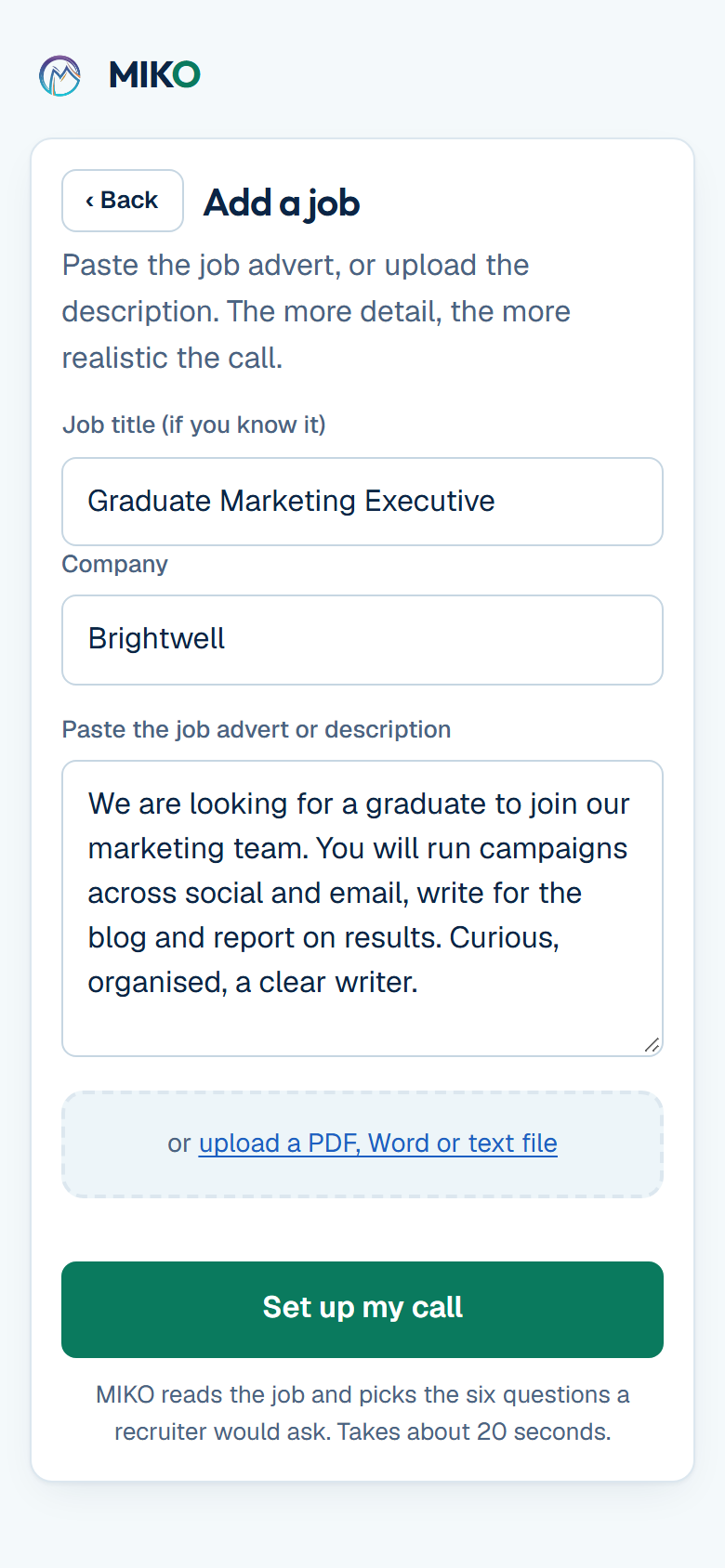
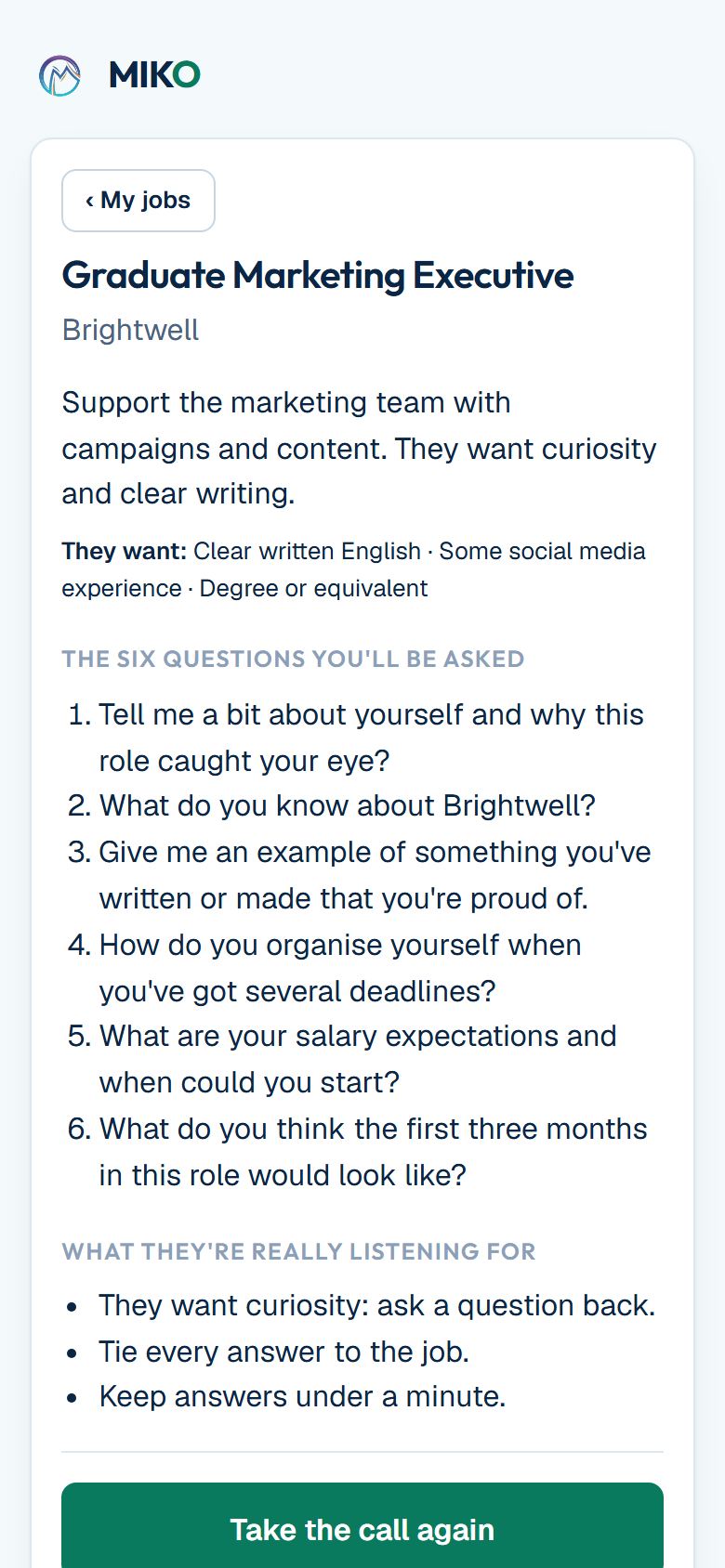
    MIKO reads the advert and fixes the six questions a recruiter would ask, and what they are listening for.

  2. 2
    They take the call.They take the call.The recruiter rings.

    On their phone, whenever suits them. A practice round first, then the real calls, one retake each.

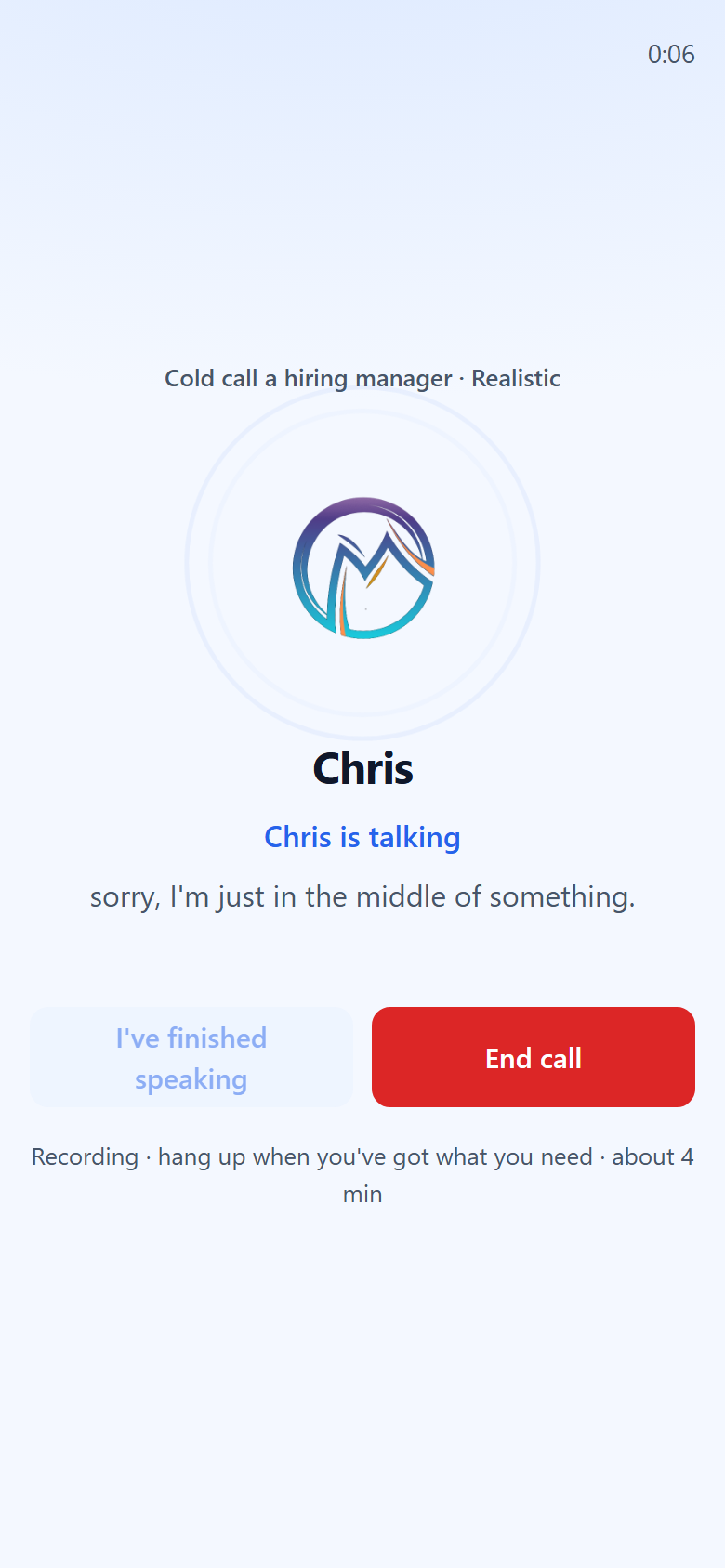
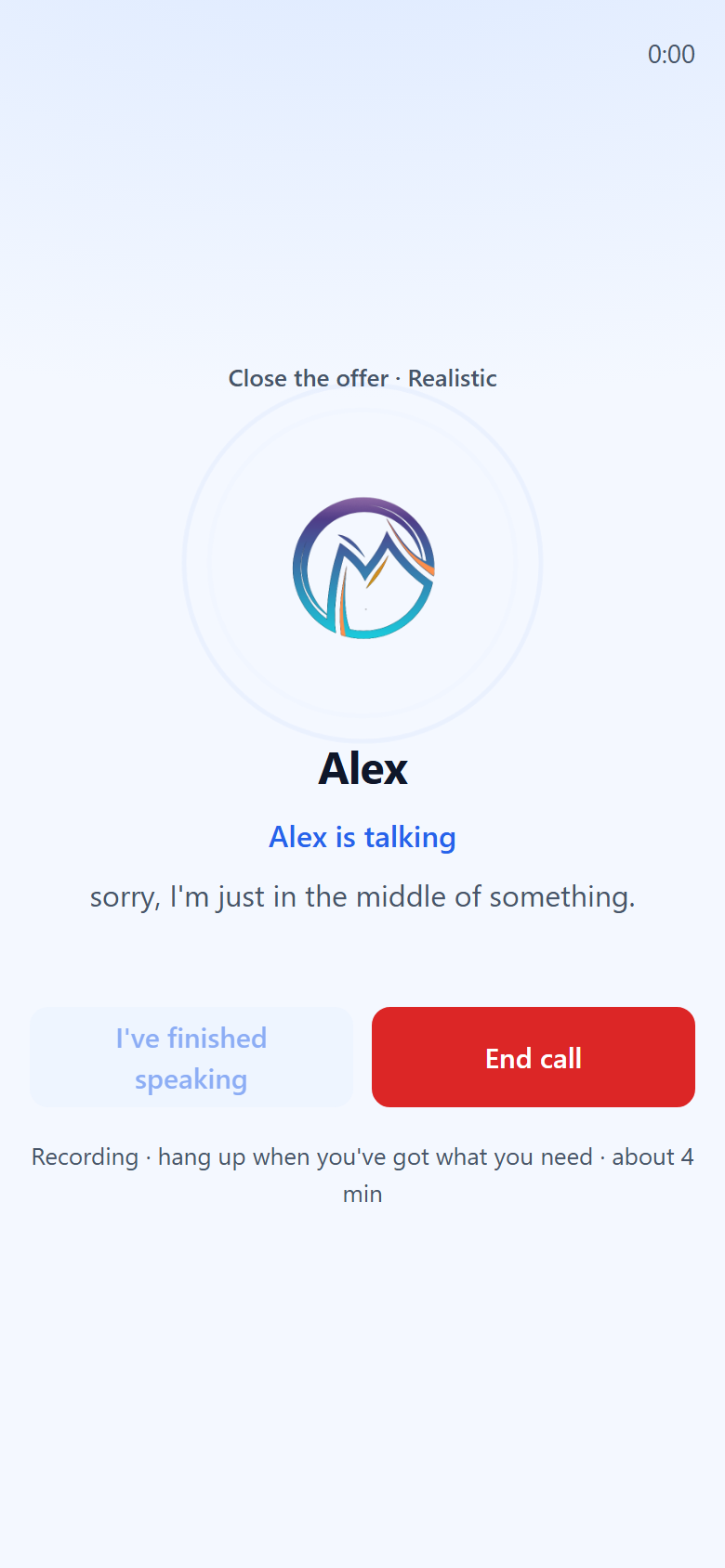
    A realistic person on the line, not a quiz. About four minutes, then straight on to the feedback.

    You see the questions first. Then Priya rings, and you answer out loud, on your phone.

  3. 3
    You read it back.They read it back.You get coached.

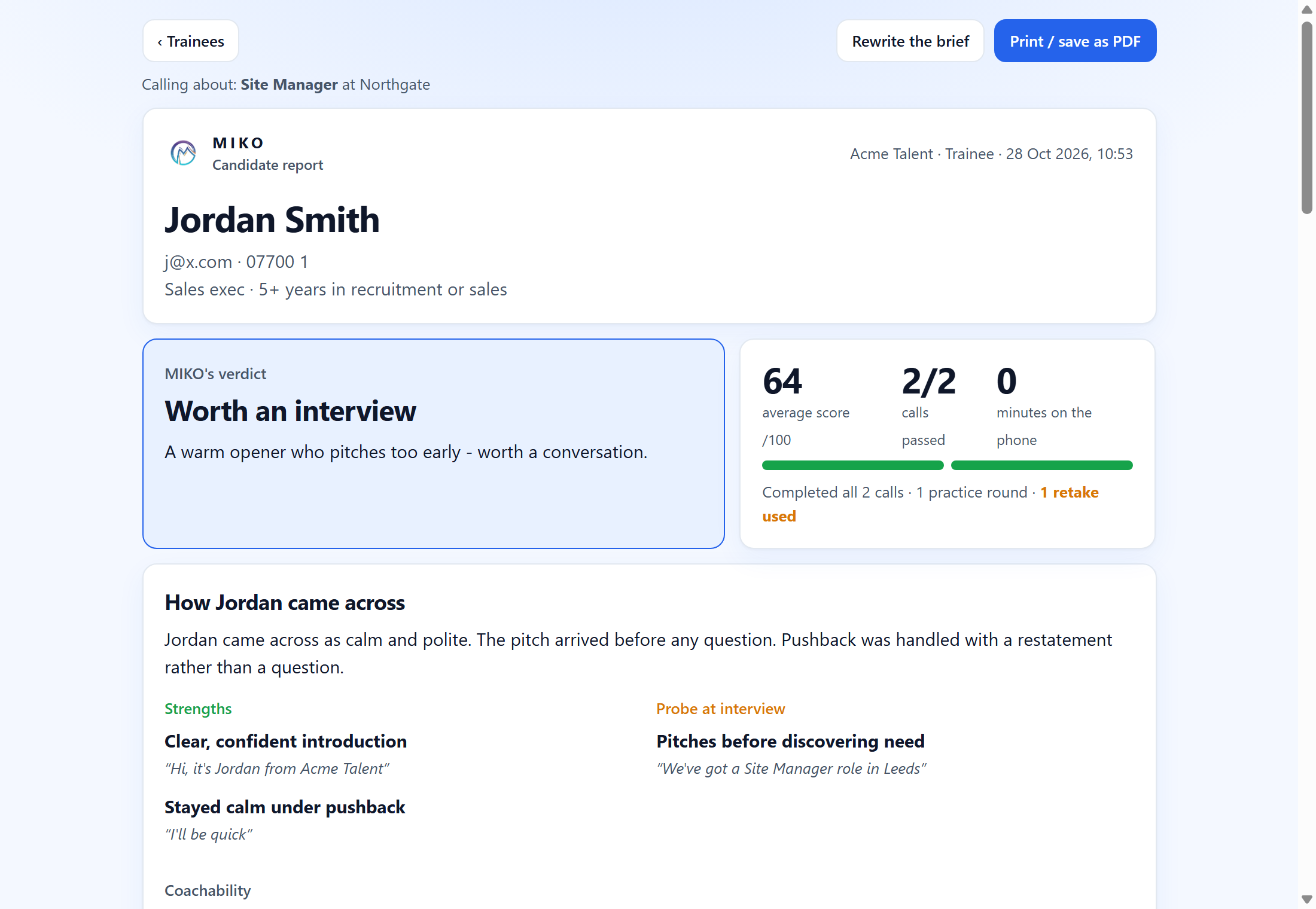
    A tier, the recording, the moments that decided it, and the interview questions written from what they said.

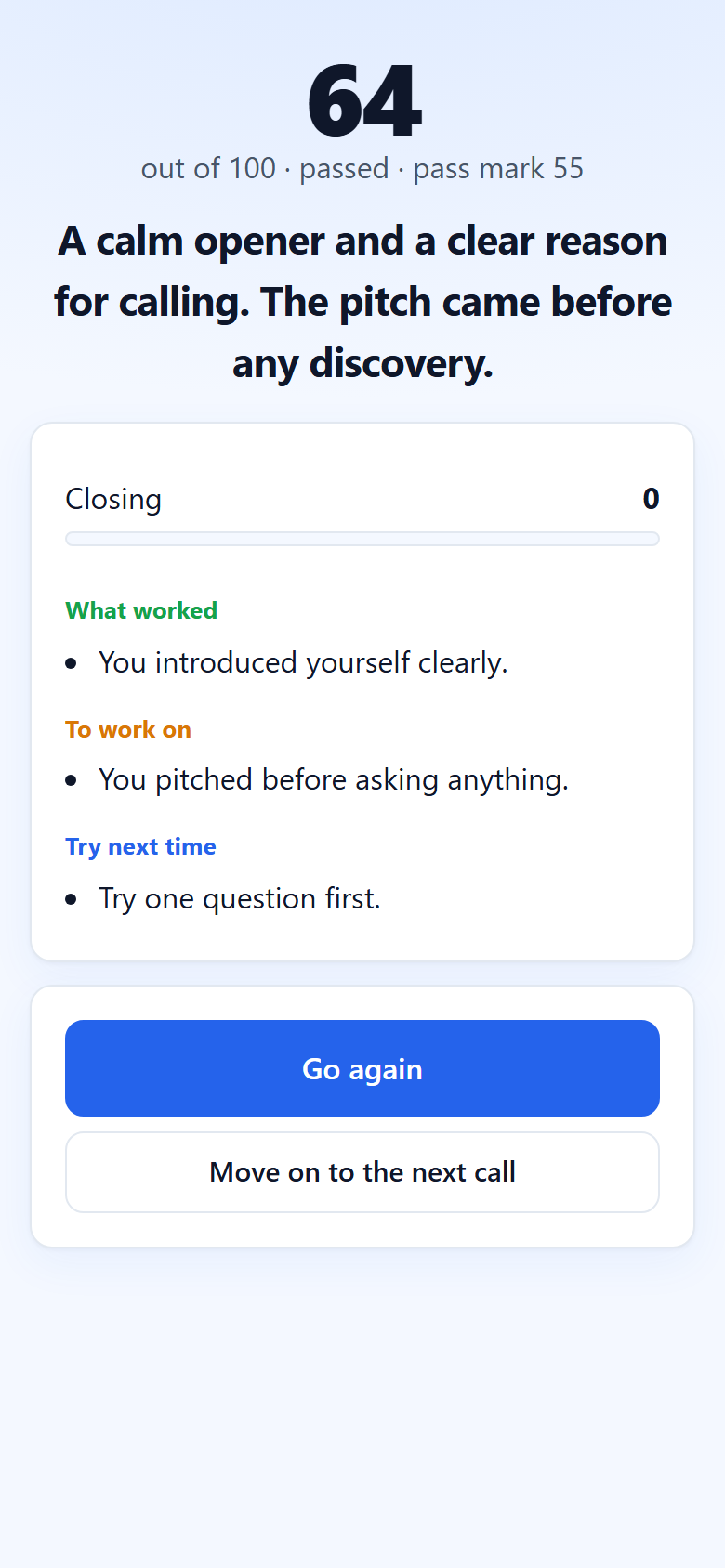
    What worked, what to change, and the line that would have landed. The manager sees effort and movement.

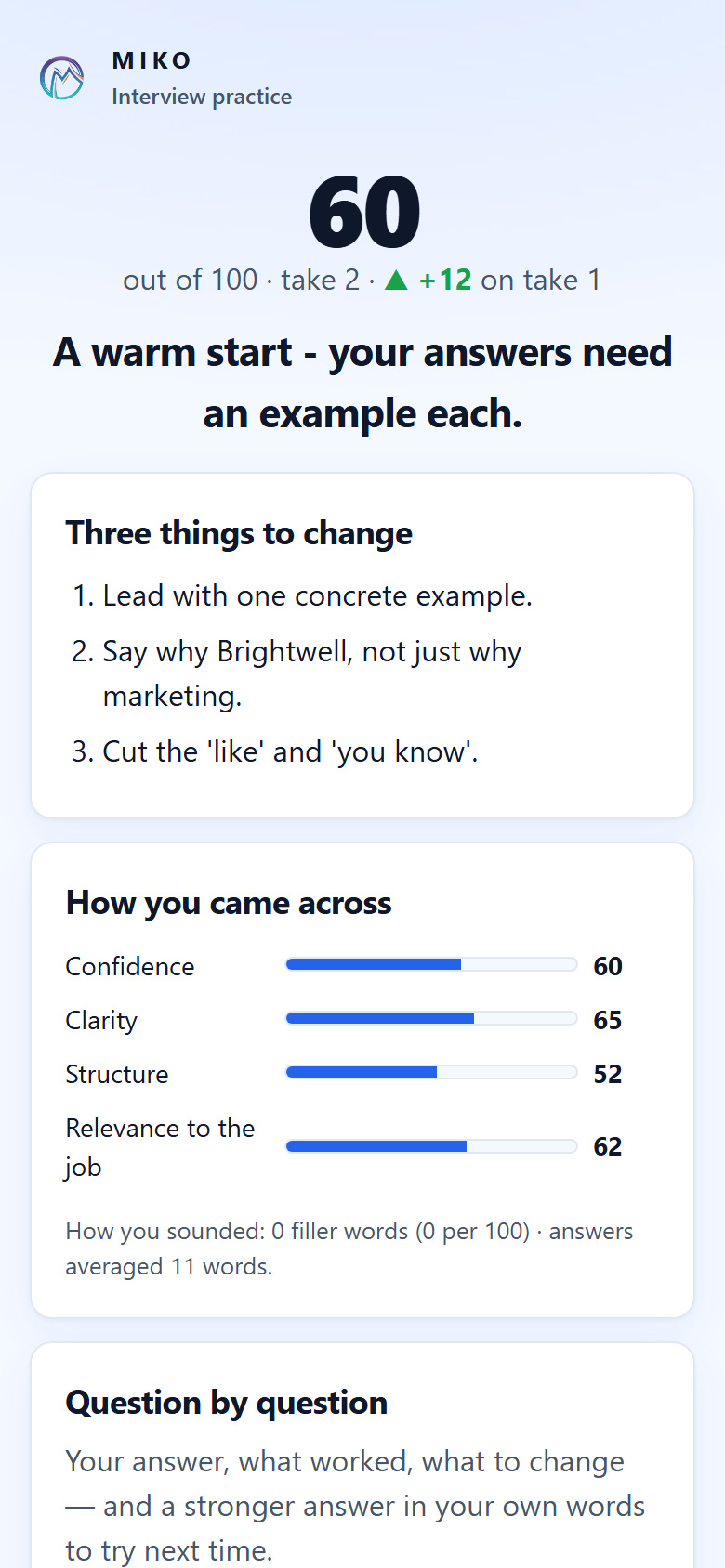
    A score, three things to change, and for every question a stronger answer in your own words.

  4. 4
    Bring them in.Go again.Take it again.

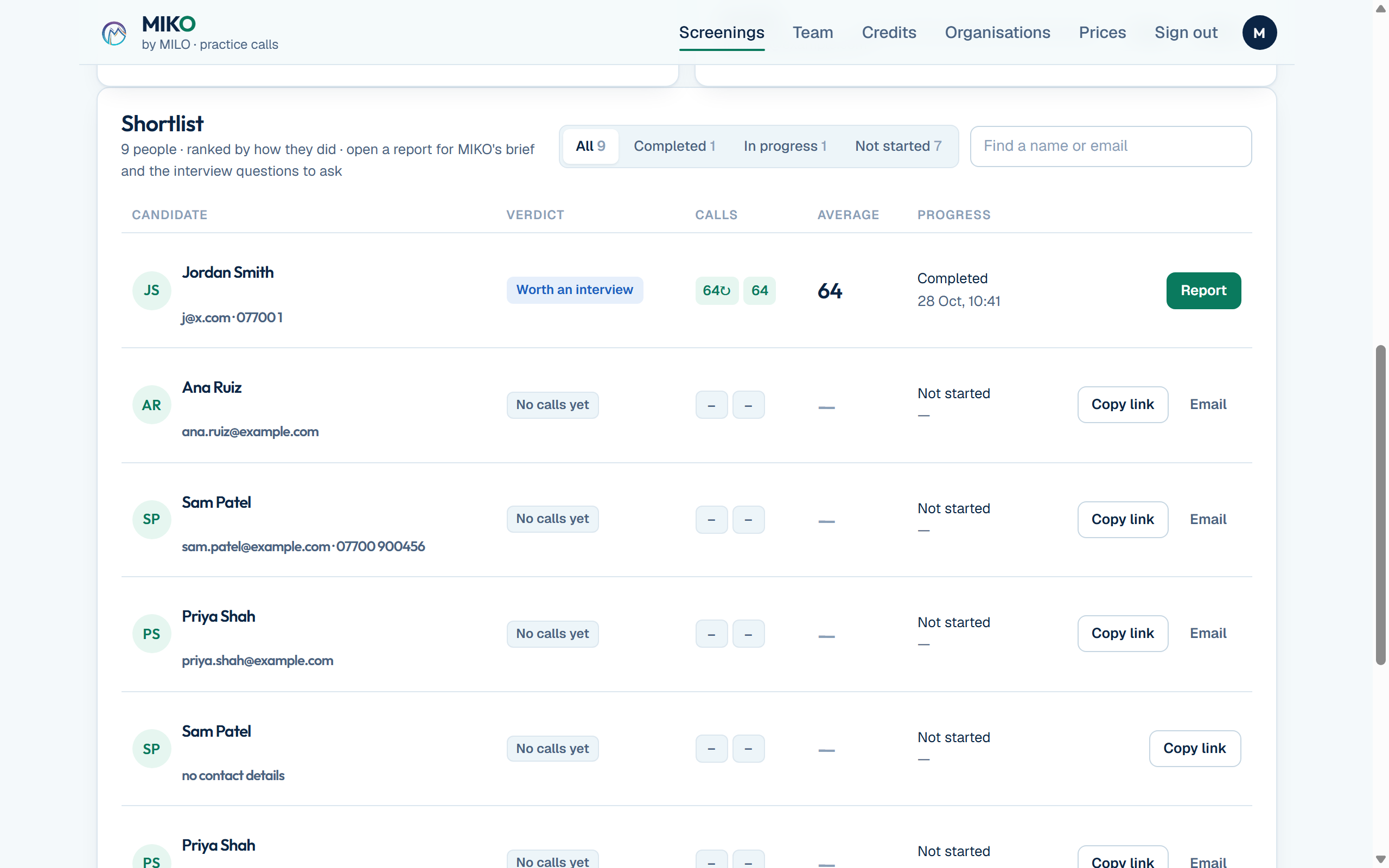
    The shortlist is ranked. Book the interview with the questions already in your hand.

    As often as they like. The best go counts, and the first go is never forgotten.

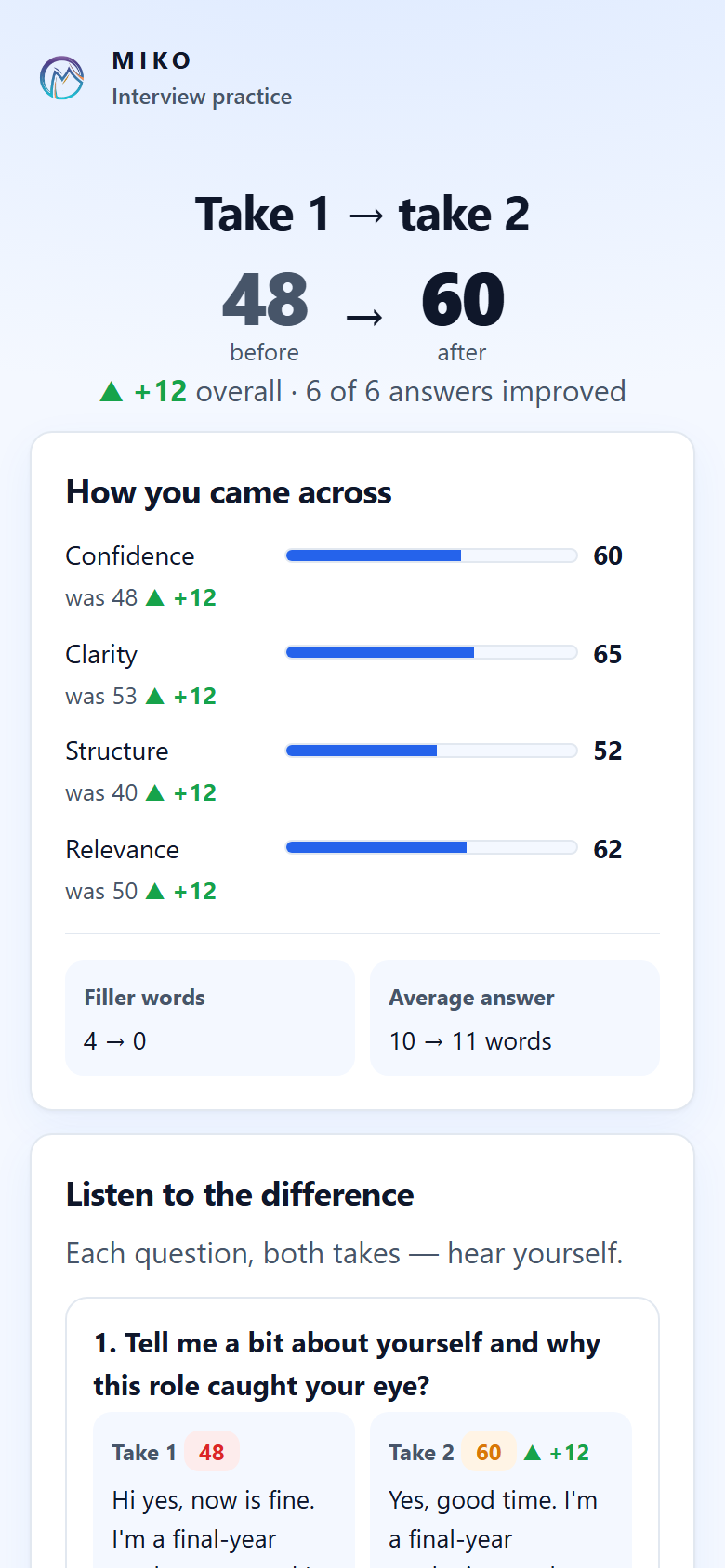
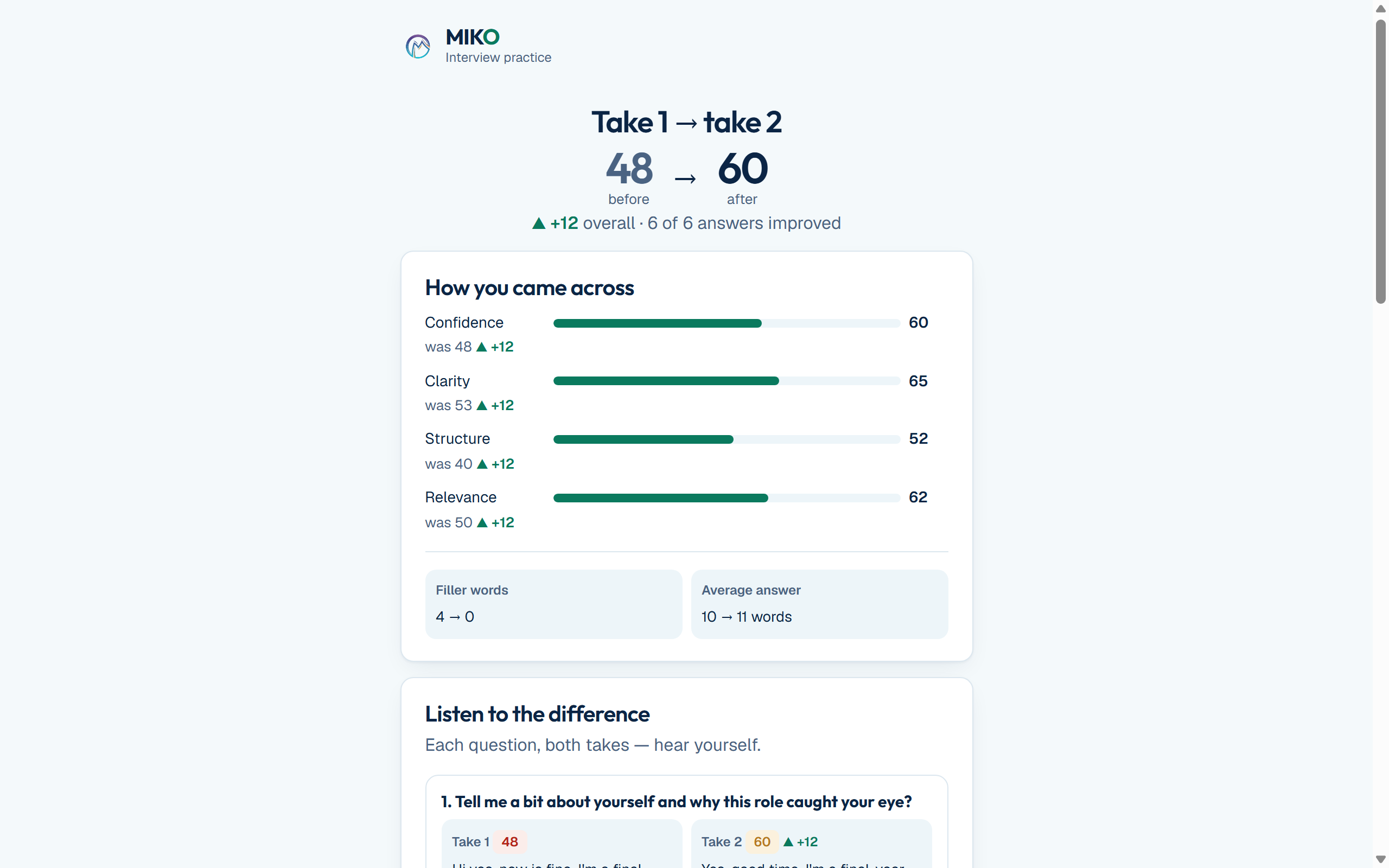
    Same questions, same order. Both recordings side by side, so you hear the difference.

Your voice is recorded for the review you agreed to, and for nothing else. We say so on screen before the first call, and the one-minute call on this page is not recorded at all.

You cannot hear a CV.The call that lost the deal is the one nobody practised.The recruiter rings before you are ready.

Every candidate makes the calls before you give anyone an hour. You listen back, read the verdict, and interview the ones who can actually talk.Your team takes the hard calls against a realistic person, hears what to change, and goes again until it sounds right. Before the real one.Add the job. Take the screening call out loud. Get coached on every answer, take it again, and walk into the real one already rehearsed.

  • Live voice, not a quizA realistic person on the line who pushes back, warms up and hangs up.
  • Verdict in two minutesFeedback in two minutesCoaching in two minutesA tier, the recording, the moments that decided it, questions to ask.What worked, what to change, the line that would have landed.Three things to change and a stronger answer in your words.
  • Recorded with consentSaid on screen before the first call. Your voice is used for the review and nothing else.

Take a one-minute call. No account, nothing saved.

Sam from MIKO will ring and screen you for a sales role, the way MIKO screens your candidates. Three questions. Then one true sentence about how you sounded.

Jordan runs operations at a haulage firm and has two minutes. You are cold-calling. Earn the next call or lose it, then hear one true sentence about how you sounded.

Priya is a graduate recruiter. She rings, asks three questions, and wraps up. Then one true sentence about how you sounded, before anyone else hears it.

S
Sam
a recruiter at MIKO
1:00
Press the button and answer the phone.

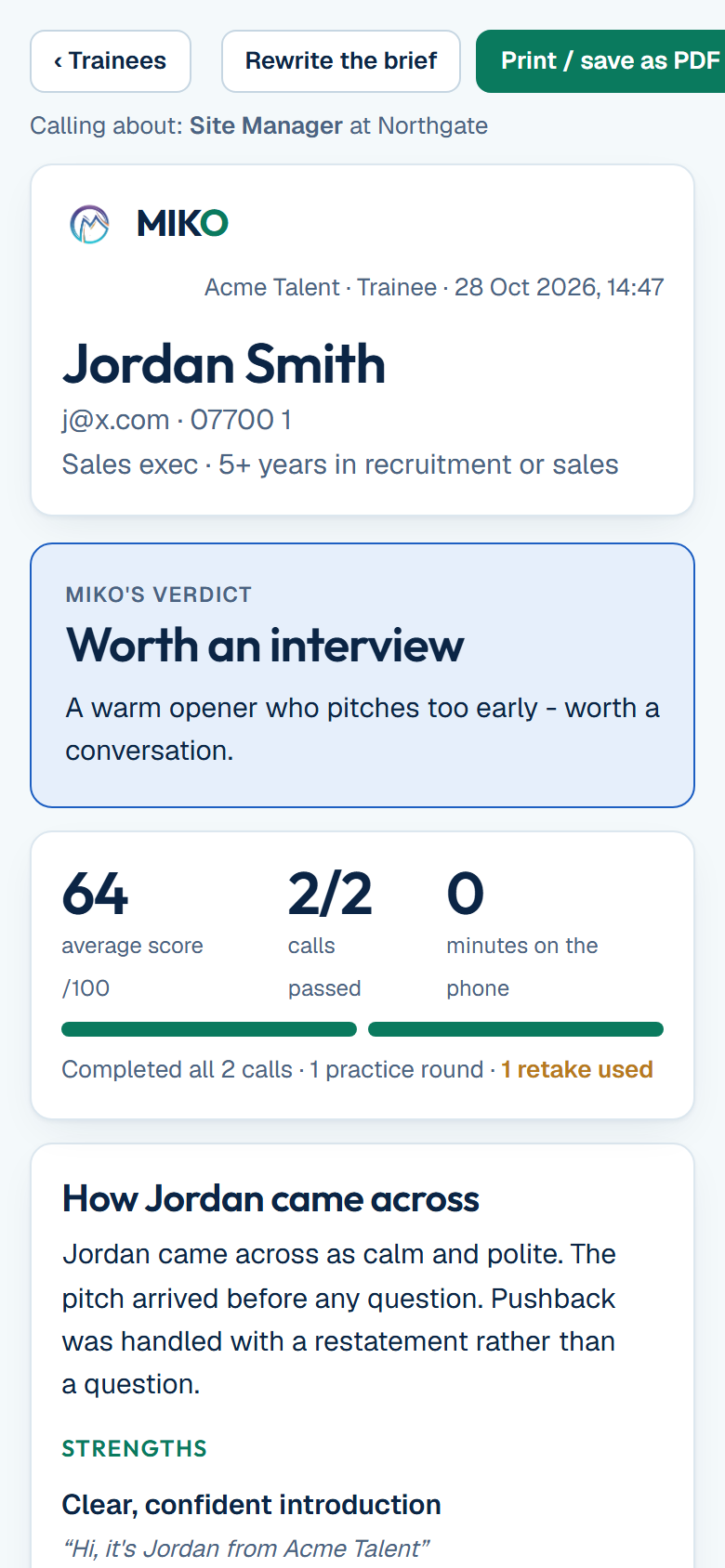
    A report that says who to bring in, and why.

    Every candidate's calls, with the recording, the transcript and the moments that decided the score. A tier, four interview questions written from what they actually said, and the retake marked. Read it on the big screen or on the train. Share it with the panel.

    Feedback a manager would give if they had the time.

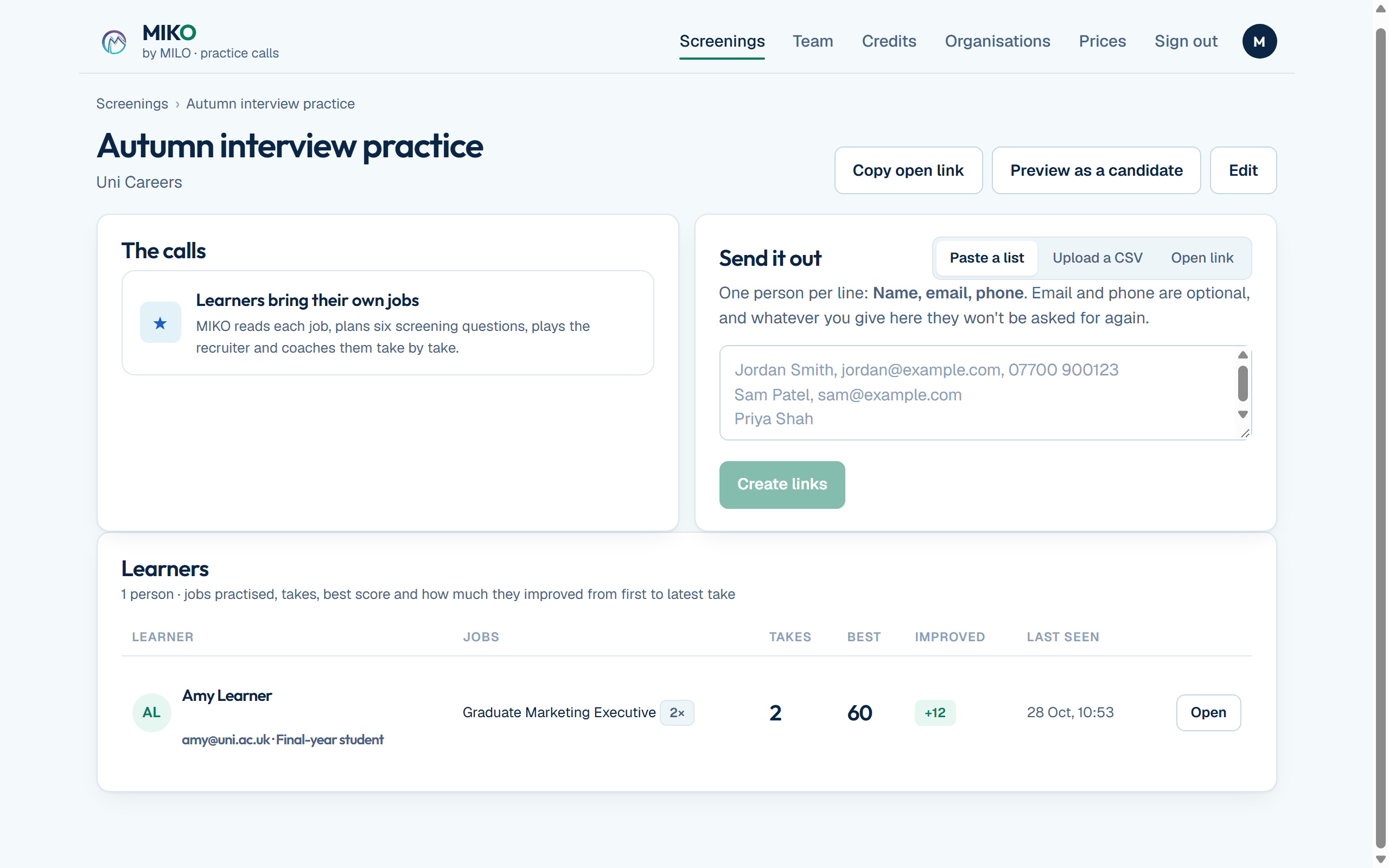
    After every practice call: what worked, what to change, and the line that would have landed. Go again as often as you like. Your manager sees effort, not a league table.

    Take one. Take two. Hear the difference.

    After the call, three things to change and a stronger answer in your own words. Take the same call again and the page puts both recordings side by side, question by question. You will hear it before anyone tells you.

    A candidate report on a laptop: verdict, the brief, skills and the call player The team's progress on a laptop Take one beside take two on a laptop
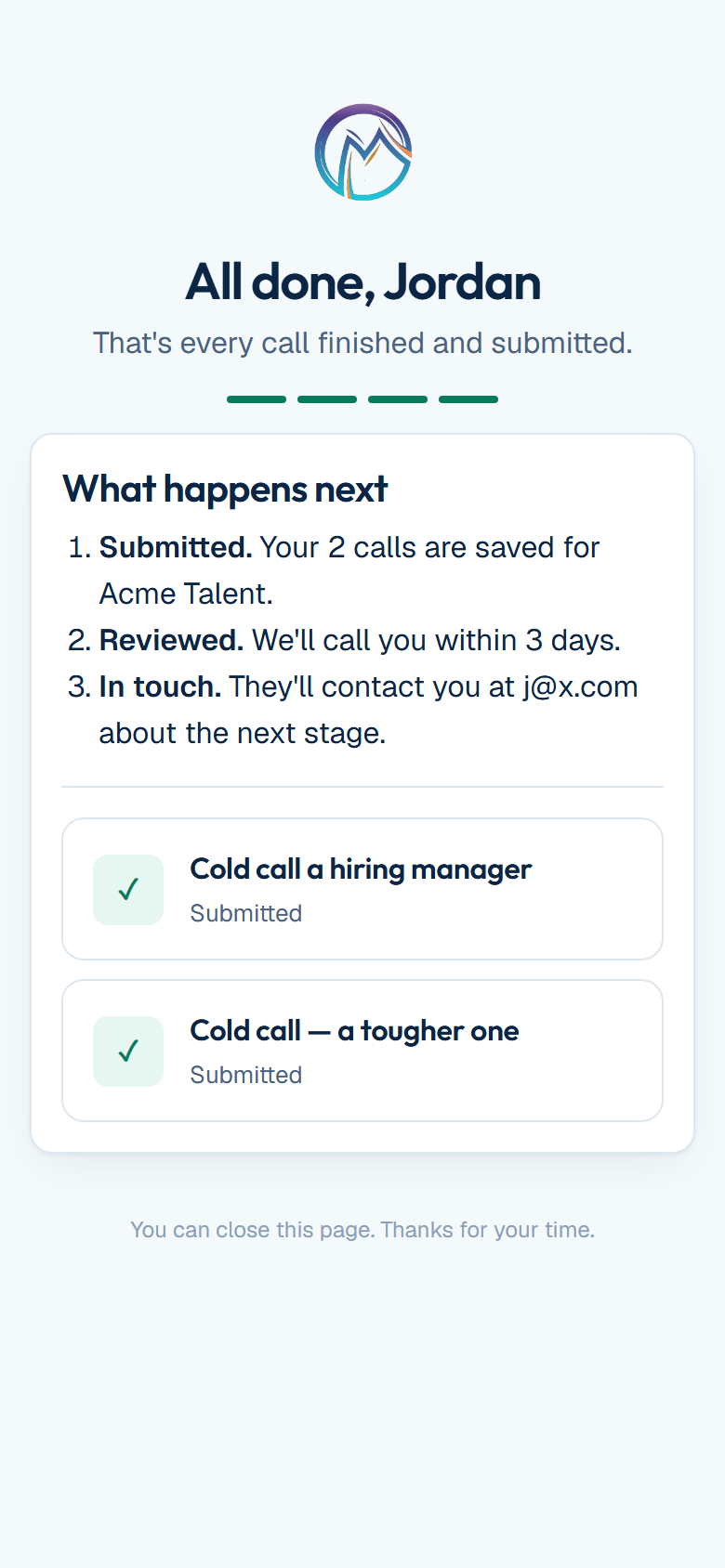
    The same report on a phone Practice feedback on a phone: score, what worked, what to change Take one beside take two on a phone
    Sample data from a demonstration workspace.

    Send your first link today.Set up your team in ten minutes.Paste the job. Answer the call.

    One email creates your workspace. Build a screening from a ready-made set of calls, add your candidates by name and email, and send the link.

    One email creates your team's workspace. Invite your people, pick the calls they should practise, and let them go again until it sounds right.

    One email creates your space. Add the job you are applying for and MIKO sets up the call. Running this for a cohort? Write to hello@ask-milo.com.

    Not you? · See the prices

    You set a password on the next page. No card, no call from us.